Table of Contents
- Key Takeaways
- What Is the Vape Tax UK and How Does It Work?
- How Much Is the UK Vaping Products Duty Under the New Tax?
- Does the Tax Depend on Nicotine Strength?
- Are Nicotine-Free E-Liquids Included?
- Will Vape Devices Be Taxed?
- Will Vape Prices Increase?
- What Are Vape Duty Stamps?
- What Does the Tax Mean for Vape Businesses?
- Will Buying in Bulk Reduce the Tax?
- Does the Tax Apply Across the UK?
- How Has the UK Government Changed Vape Tax After Brexit?
- How Does Vape Tax Compare With Cigarette Tax?
- Why Is the Government Introducing a Vape Tax?
- What Does This Mean for Adult Smokers?
- Conclusion
- References
Key Takeaways
-
The UK Vaping Products Duty comes into effect on 1 October 2026 and will apply to qualifying vaping liquids sold in the UK.
-
The new duty is charged at £2.20 per 10ml of vaping liquid, regardless of whether it contains nicotine.
-
Although vaping products are expected to become more expensive, they are still likely to remain significantly cheaper than smoking cigarettes for most adult smokers.
The UK vaping industry is preparing for one of its biggest regulatory changes in recent years. From 1 October 2026, a new tax called Vaping Products Duty will apply to vaping liquids sold in the UK. The new duty is designed to raise revenue, discourage youth vaping and strengthen enforcement against illicit products while keeping vaping a lower-taxed alternative to smoking.
If you vape, own a vape business or are thinking about switching from cigarettes, it's important to understand how the new tax works. This guide explains who the tax affects, how much it will cost and what it could mean for vape prices across the UK.
What Is the Vape Tax UK and How Does It Work?
The new UK vape tax(1) is officially known as Vaping Products Duty. Unlike VAT, which is already charged on most vaping products, this is a separate excise duty based on the amount of vaping liquid contained in a product.

The duty applies to nicotine e-liquids, nicotine-free vape liquids, prefilled pods, cartridges and vaping devices that contain e-liquid, covering all substances intended for vaping whether they contain nicotine or not. It does not apply to empty vape hardware such as batteries, chargers or refillable devices sold without liquid.
Although the legislation has already been introduced, the duty does not begin until 1 October 2026. Businesses have been preparing throughout 2026 to ensure they comply with the new HMRC requirements before the new vape duty takes effect.
How Much Is the UK Vaping Products Duty Under the New Tax?
The Vaping Products Duty will be charged at a flat rate of £2.20 per 10ml of vaping liquid. This works out at 22p per millilitre. For example, a standard 10ml bottle of e-liquid will carry £2.20 in duty, while a 2+10ml device will be hit with £2.64 in extra Duty on top of the retail price.
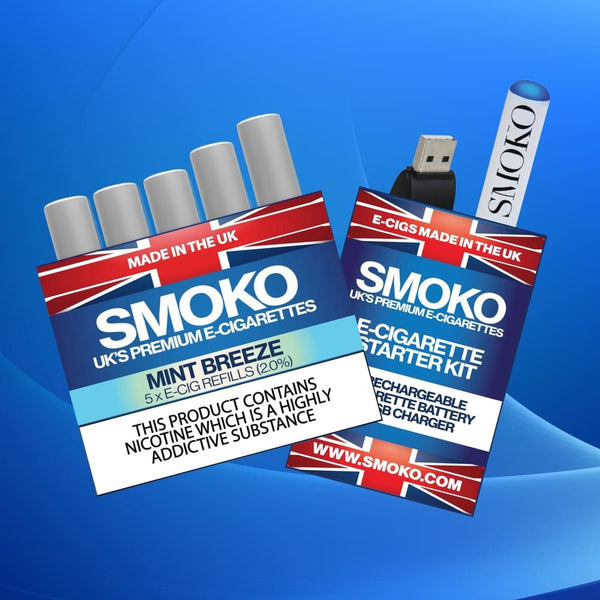
At SMOKO, we are working hard to manage this new Vaping Product Duty and will keep our customers informed well before the duty starts being applied.
It's important to remember that these figures represent the duty itself rather than the final retail price increase. Manufacturers and retailers may absorb part of the cost or adjust pricing in different ways, so consumers should not expect every vaping product to increase by exactly the same amount.
Does the Tax Depend on Nicotine Strength?
No. The final legislation applies the same duty rate to all qualifying vaping liquids, regardless of nicotine strength or nicotine content.
Earlier government consultations considered charging different rates depending on nicotine concentration, but this approach was not adopted. Whether a product contains 20mg nicotine, a lower nicotine strength or no nicotine at all, the duty remains the same.
The UK's maximum legal nicotine strength of 20mg/ml is a product safety regulation and has no effect on the amount of tax charged.
Are Nicotine-Free E-Liquids Included?
Yes. One of the biggest changes compared with the original consultation proposals is that nicotine-free vaping liquids are also included within the scope of Vaping Products Duty.
This means both nicotine and nicotine-free e-liquids(2), along with prefilled pods, nicotine free liquid, 10ml e liquid bottles, and other vaping liquids intended for use in e-cigarettes, will be taxed from October 2026. UK product rules also limit tanks and pods to a maximum capacity of 2ml.
Will Vape Devices Be Taxed?
The duty applies to the vaping liquid rather than the hardware itself. An empty rechargeable vape device sold without liquid, including refillable vape kits, will not be charged Vaping Products Duty, although it will normally still be subject to VAT.

If a device contains e-liquid when sold, the duty is calculated according to the amount of liquid inside the device. Chargers, replacement batteries, USB cables and other accessories are not affected by the new excise duty.
Will Vape Prices Increase?
Most vaping products are expected to become more expensive once the new tax takes effect. The exact increase will depend on the type of product, the amount of e-liquid it contains and how manufacturers and retailers choose to price their products.
Some businesses may pass the full duty on to customers, while others may absorb part of the increase or adjust promotions and product ranges to remain competitive, so the final shelf price will depend not only on the tax but also on the product’s base cost and wider supply chain costs. As a result, the final price increase will vary between brands and retailers.
What Are Vape Duty Stamps?
Alongside the new tax, the government is introducing a Vaping Duty Stamps Scheme. Duty stamps will appear on qualifying retail packaging to help HMRC, retailers and consumers identify products that have entered the UK market through legitimate supply chains. The stamp must seal the packaging so any tampering is easier to spot and compliance is clearer.
The stamps are intended to reduce the sale of illicit vaping products and improve enforcement against untaxed goods. Businesses manufacturing or importing qualifying products will need to comply with the duty stamp requirements before products are released for sale, with all products outside duty suspension needing a duty stamp by 1 April 2027 and any UK representative requiring approval under the Vaping Duty Stamps Scheme.
What Does the Tax Mean for Vape Businesses?
Businesses must register with HMRC(3), and manufacturers must apply for VPD approval by 1 April 2026. They will also need to maintain accurate records, manage duty payments and ensure qualifying products carry the correct duty stamps. Businesses may also need approval to store products manufactured or imported without paying duty immediately under duty-suspension arrangements.
Retailers that simply buy duty-paid products from approved suppliers may not need the same approvals, but they should buy only legitimate products from lawful, duty-compliant supply chains and still ensure the items they sell meet all legal requirements. Working with trusted suppliers and maintaining clear purchase records will become increasingly important.
Businesses must also ensure vaping products manufactured or imported are approved, stored correctly, and only release vaping products for sale once duty and stamp requirements are met.
Will Buying in Bulk Reduce the Tax?
No. The duty is calculated according to the total amount of vaping liquid rather than the number of products purchased. For example, buying vape juice in bulk does not reduce the amount of UK Vaping Products Duty you pay. Whether you prefer a high-capacity prefilled pod that lasts several days or larger bottles of vape juice with separately purchased nicotine shots, the new tax is calculated according to the total volume of qualifying vaping liquid, not how or when you use it.
Buying several bottles of vape juice or prefilled pods at once may reduce the price per unit if a retailer offers a promotion, but it does not reduce the amount of UK Vaping Products Duty you pay. The new tax is calculated on the total volume of qualifying vaping liquid, regardless of how it is purchased or used. This also applies if you mix your own e-liquid using nicotine shots. Adding nicotine shots to a shortfill does not avoid the duty, as the qualifying vaping liquids remain subject to tax under the UK Vaping Products Duty rules.
Does the Tax Apply Across the UK?
Yes. Vaping Products Duty applies throughout England, Scotland, Wales and Northern Ireland.
Although Northern Ireland has some different customs arrangements following Brexit, the new vaping duty applies across the whole of the United Kingdom. This article covers the UK-wide tax regime, and travellers bringing vaping products in for personal use should check HMRC guidance on any duty free allowance.
How Has the UK Government Changed Vape Tax After Brexit?
Brexit changed the way some vaping products are imported into the UK, but it did not automatically increase customs duties on every product arriving from the European Union.
Whether customs duties apply depends on where the products were manufactured, how they are classified and whether they qualify under the UK-EU Trade and Cooperation Agreement. Regardless of their country of origin, qualifying vaping liquids will still be subject to Vaping Products Duty from October 2026.
How Does Vape Tax Compare With Cigarette Tax?
Although vaping products are expected to become more expensive with the introduction of the new vape tax and other associated costs, cigarettes will continue to face substantially higher levels of taxation(4) overall. The impact of the UK Vaping Products Duty will vary depending on the product. For example, a standard 10ml bottle of vape juice will incur more duty than a 2ml prefilled pod because the tax is based on the volume of vaping liquid. Larger bottles of vape juice, such as shortfills, will attract proportionally higher duty based on their total liquid volume.

The government has also announced further increases to tobacco duty alongside the introduction of Vaping Products Duty. The aim is to discourage smoking while maintaining a financial incentive for adult smokers to switch to less harmful alternatives.
For most adult smokers, vaping is still expected to remain considerably cheaper than buying cigarettes when you look at the total cost over time, not just the upfront spend, even after the new tax begins.
Why Is the Government Introducing a Vape Tax?
The UK Government says the new vape tax has several objectives. Its main aim is to reduce the affordability and appeal of vaping products, particularly among young people and non-smokers, while maintaining a financial incentive for adult smokers to switch from cigarettes. The duty is also expected to generate significant tax revenue, with HMRC estimating it will raise around £400 million in 2027–28, increasing to approximately £565 million a year by 2030–31. The policy comes amid concerns about youth vaping, with Action on Smoking and Health reporting that 20.5% of children aged 11 to 17 have tried vaping at least once. It also complements wider UK vaping regulations, including the nationwide ban on the sale and supply of single-use (disposable) vapes(5) that came into force on 1 June 2025.
The introduction of the tax does not mean vaping is considered as harmful as smoking. The NHS continues to state that vaping is less harmful than smoking(6) and can be an effective tool for adult smokers trying to quit.
What Does This Mean for Adult Smokers?
For adult smokers thinking about switching, vaping is likely to remain a much cheaper option than smoking despite the new duty, and still a relatively low cost choice for many. While the tax may reduce some of the financial savings, the difference in cost between cigarettes and vaping is expected to remain significant. It can also help to estimate your monthly spend on e-liquid and pods after tax so you can plan ahead before switching.
The greatest health benefit comes from switching completely away from smoking rather than using both cigarettes and vapes at the same time. Adult smokers who want to quit should also consider support from NHS Stop Smoking Services; vaping products are intended for adults and the legal purchase age in the UK is 18+, alongside a regulated vaping product, such as a regulated vape kit rather than illicit or unverified products. Regulated pre filled options and nic salts will also become more expensive under the duty, but they should still be bought only from compliant sellers.
Conclusion
The introduction of Vaping Products Duty marks a major change for the UK vaping industry. From 1 October 2026, qualifying vaping liquids will be taxed at £2.20 per 10ml, regardless of nicotine strength.
Although the new duty is likely to increase the price of many vaping products, vaping is still expected to remain considerably less expensive than smoking for most adult smokers. Consumers can save money by choosing products carefully as prices rise, though they should still buy only from reputable UK sellers and, once the scheme is in force, look for a valid duty stamp with a vaping duty stamp attached to compliant retail packaging, whether the e liquid sold is bottled liquid, pods, or made by mixing multiple duty paid liquids; some options may remain cheaper than others after duty. Businesses should also understand UK Vape Duty rules early so they can prepare for compliance and pricing changes before the tax comes into force.
As the UK vaping market continues to evolve, staying informed about changes to taxation and regulation will help both consumers and businesses make confident, informed decisions.
References
(1) UK Vaping Products Duty: £2.20 per 10 ml Vape Tax from October 2026
(2) Which Vape Products Are Covered by UK Vaping Products Duty?
(3) Vaping Products Duty and Vape Duty Stamps: HMRC Compliance Guide
(4) UK Tobacco Duty Increases Alongside the New Vape Tax
(5) UK Disposable Vape Ban: Rules in Force from June 2025
(6) NHS Guide to Vaping, Smoking and Quitting Cigarettes
ABOUT THE AUTHOR
Written by Mike Cameron
Mike Cameron is a former smoker of 15 years (2 packs a day) until he successfully quit using a cigalike. Mike is the Co-Founder and CEO of SMOKO E-Cigarettes and over the last 13+ years, SMOKO has prevented 850M+ cigarettes from being smoked, helped their customers save £510M+ of their hard-earned money from going up in smoke and helped 10,000’s of adult smokers in 25+ countries to live smoke-free.
Last updated 28/07/2026