Table of Contents
- HARMFUL CHEMICALS IN VAPES AND E-LIQUIDS YOU SHOULD AVOID
- INTRODUCTION
- IS VAPING BAD FOR YOU?
- WHAT ARE E-LIQUIDS?
- WHAT DO E-LIQUIDS CONTAIN?
- WHAT CHEMICALS SHOULD YOU AVOID IN YOUR E-CIGARETTE?
- PULEGONE
- DIACETYL, ACETOIN OR PENTANEDIONE
- POPCORN LUNG SYMPTOMS
- HEAVY METALS
- VITAMIN E ACETATE
- DIETHYLENE GLYCOL
- HOW DO E-LIQUID FLAVOUR COMBINATIONS AFFECT YOU?
- IS VAPING BETTER THAN SMOKING?
- WHAT TO CONSIDER WHEN BUYING E-CIGARETTE REFILLS AND E-LIQUIDS?
- HARMFUL CHEMICALS YOU SHOULD AVOID IN E-LIQUIDS: CONCLUSION
- REFERENCES
HARMFUL CHEMICALS IN VAPES AND E-LIQUIDS YOU SHOULD AVOID
E juice formulation involves various ingredients, some of which can be harmful. Chemicals you should avoid in e-liquids include:
- Diacetyl as it is linked to the condition ‘popcorn lung’. Diacetyl was originally used as a flavouring in microwave popcorn, which led to health concerns for factory workers and the term 'popcorn lung'.
- Acetoin is known to react in e-liquid to form diacetyl.
- Pentanedione is a flavouring linked with inflammation and lung damage.
- Diethylene glycol was found in some E-Cigarettes in 2009 and is considered a toxic substance.
- Vitamin E acetate has been used to add illicit substances to liquids and is linked to vaping injury.
INTRODUCTION
Electronic cigarettes are known as ‘electronic nicotine delivery systems’ or ENDS in the scientific community. The idea is to deliver nicotine without the harmful chemicals found in traditional cigarettes, satisfying a nicotine addiction but with the harm from smoking significantly reduced!
The toxic chemicals inhaled when smoking cigarettes are well documented, but there are lots of articles claiming a wide range of ‘truths’ regarding the safety of Vape products and e liquid ingredients. A little investigation will yield everything from ‘vaping is 100% safe’ to ‘vaping is as dangerous as smoking cigarettes’.
The truth lies somewhere between those two statements, and the important question to answer for the layman is: which is closer to the truth, and why?
IS VAPING BAD FOR YOU?
Vaping isn't entirely risk free, however when you compare the risks from vaping compared to the risks from smoking, vaping is the better option. According to Public Health England, E-Cigarettes are at least 95% less harmful than smoking tobacco cigarettes (1)! Vaping eliminates the harmful smoke and many toxic chemicals associated with traditional smoking, making it a safer alternative for those looking to avoid the dangers of tobacco combustion.
In the UK, e-liquids are held to the highest standards by the Medicines and Healthcare products Regulatory Agency (MHRA) to prevent harmful ingredients in vape juice that is produced in the UK. What chemicals are in vapes from China or other disposable vape manufacturers? We just can't be certain of the quality of the flavourings and other ingredients going into disposable vapes.
WHAT ARE E-LIQUIDS?

E-liquids (also known as vape liquids) are the consumed product in the practice of vaping; it contains the nicotine needed to satisfy the nicotine withdrawal smokers suffer when quitting smoking.
A vape device works by heating up the e-liquid until it turns into an aerosol, which is a mixture of particles dispersed in air or gas, so it can be inhaled by the user. This gets nicotine into the lungs, to be absorbed into the bloodstream, much like when smoking.
E-liquids can be purchased in bottles for filling your own device, and in pre-filled e-cigarette and pod refills!
WHAT DO E-LIQUIDS CONTAIN?
The e-liquid mixture, fondly called ‘vape juice’ or 'vape liquid' by many, is made with only 4 ingredients (including nicotine). Understanding vape juice ingredients, particularly those that should be avoided for health reasons, is crucial. So, what chemicals are in vaping liquid?
The 4 ingredients are: propylene glycol (PG), vegetable glycerin (VG) or ‘glycerol’, flavourings, with a specific amount of nicotine added.
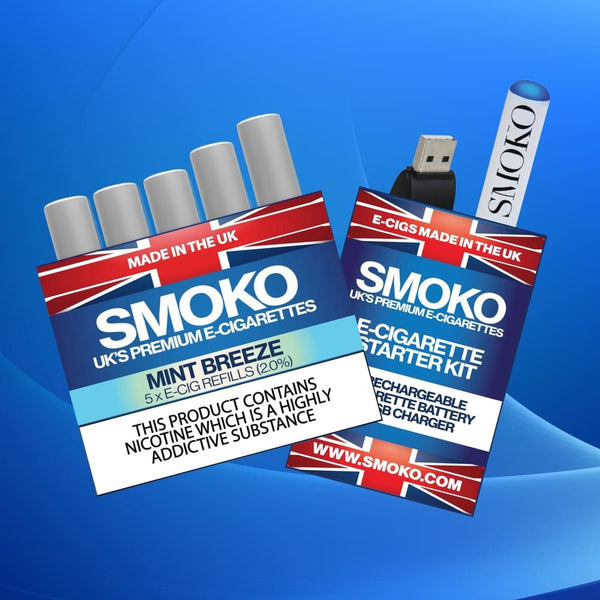
Propylene glycol is a key ingredient in e-liquids and is also widely used as a food additive in food products, body lotions, shaving creams, pharmaceutical fluids, and theatrical smoke machines due to its safety and versatility. As the other main component of e-liquids, PG is known to carry flavour effectively and contributes to a smooth throat hit and smooth flavour, making it a preferred choice for many vapers seeking a satisfying throat hit and a satisfying vaping experience. It helps the vaping experience feel close to a smoking sensation - something SMOKO customers appreciate in the SMOKO E-cigarette!
Vegetable glycerine is responsible for vapour production, especially in dtl vaping and restricted direct to lung styles, with higher VG liquids producing thick, voluminous clouds - we’ve all passed these conspicuous vapers in the street, and walked through their clouds like a bad boy-band music video!
The flavourings added allow for a huge range of different vape juice flavours. High-quality and premium e liquid brands use natural food grade flavours and pharmaceutical grade ingredients to ensure premium quality and safe vaping. Vape juice brands offer numerous flavours, including dessert inspired flavours, dessert inspired blends, menthol flavours, menthol flavour, bar salts, and other vape juice flavours to appeal to different taste buds and favourite flavours, enhancing your vaping journey.
Nicotine, the final ingredient, is available in different forms: freebase nicotine, nicotine salts, and nic salt. These options allow users to choose from various nicotine strengths and nicotine level options to customize their vaping journey for a satisfying vaping experience and nicotine hit. Nicotine free e-liquids are also available, and are used to add your own nicotine if you plan to mix your own liquids.
Another ingredient to be cautious of is caffeine. Consuming huge amounts of caffeine, especially in unregulated forms like some vape juices, can lead to serious health issues such as rapid heartbeat and jitteriness, particularly for individuals with preexisting conditions like high blood pressure.
Why would you mix your own liquids? The maximum nicotine strength allowed for sale is 2.0%, or 20mg per ml, for e-liquids and e-cigarette refills in the UK, but I’ve seen blog posts from people who mix up to 5% or 50mg per ml using nicotine shots and e-liquid shortfills! Shortfill e liquids are designed to let users add nicotine shots for personalised nicotine strengths and nicotine level.

That’s a bit like using dynamite to start a campfire: overkill!
Before we become inundated with messages from vapers saying ‘hey! Nicotine shots are regulated!’ This is true, however, they are subject to a different set of regulations - the GPSR (General Product Safety Regulations) which assumes they will be used as intended. Inhalation products like vape liquids are subject to specific safety standards to ensure safe vaping.
However, you know what people are like - for every nine people that follow the guidelines, one will completely ignore them!
When choosing your vape liquid, beware of cheap e liquid from unregulated sources, as it may not meet premium quality or safety standards. Selecting leading brands and the right flavour can enhance your vaping journey and provide a satisfying vaping experience.
WHAT CHEMICALS SHOULD YOU AVOID IN YOUR E-CIGARETTE?
In the United States, the FDA made many flavoured e juices illegal because of the potential damage done by flavourings and additives that were finding their way into some e juices in the USA.
PULEGONE
Pulegone is found in oils extracted from mint plants and is known to cause cancer. It is found in mint and menthol flavouring and has been detected in e-cigarette vapour.
One study that focused on the levels of pulegone in five e-liquids and one smokeless tobacco product found that pulegone levels were not only higher than the acceptable levels of intake of synthetic pulegone deemed by the FDA, but higher than levels in menthol cigarettes (2).
DIACETYL, ACETOIN OR PENTANEDIONE
Diacetyl is a flavouring that was used in popcorn factories, where workers began suffering from a lung disease called bronchiolitis obliterans, commonly known as ‘popcorn lung’. This condition causes the small airways to become inflamed, leading to breathing issues. It is an irreversible condition that needs to be treated to slow its progression; however the median survival time is two and a half years.
While diacetyl is safe as a food ingredient, it is linked to the condition ‘popcorn lung’ when inhaled - so it is already banned for flavourings in e-liquids in Europe and the UK.
Acetoin is another chemical to watch out for - while it is less toxic, acetoin reacts over time in the e-liquid to form diacetyl, and this is sped up in the presence of nicotine (3).
Thirdly, watch out for the inclusion of acetyl propionyl, also called ‘pentanedione’, in vape juice. It is another flavouring that is used in sweet and creamy e-liquid flavours. It is known to cause inflammation of the respiratory tract, lung damage and even death in rats.
POPCORN LUNG SYMPTOMS
What is popcorn lung? It is a condition that was named for the popcorn factories where diacetyl was used as flavouring. Inhaled by the factory workers, many of whom began to suffer coughing and shortness of breath. The medical term, 'bronchiolitis obliterans', refers to the damage done to the smallest airways in the lungs, which makes the airways swollen and leads to scarring that makes them narrower.
This all leads to making it hard to get enough air, leaving sufferers short of breath. Sadly, the damage done is lasting and can be severe. Treatment is required to stave off the inflammation and encourage the airways to open, or in the worst cases a lung transplant may be the only option.
HEAVY METALS
Vape juice itself doesn’t contain heavy metals, but a consequence of heating the e-liquid in contact with metal is the leaching of metal particles into the liquid, which are then present in the aerosol produced.
The more powerful style vape devices produce more of these potentially harmful byproducts, due to the higher temperatures that they can reach, with higher voltages increasing the concentration of some elements, like lead, in the aerosol produced by the vape oil ingredients.
This is where cigalike and pre-filled pod systems could be ahead of the curve - the pre-filled cartridges ensure that the coils are only being used for a short time as they are in the refill, so the coil doesn’t have much of a chance to degrade before the refill is finished.
Add to that the fixed, low power output - the SMOKO E-cigarette battery puts out about 3.5 watts, compared to a box mod that puts out about 40 watts - indicating that the coils in the low powered devices are put under much less strain and heat, reducing the potential for degradation.
VITAMIN E ACETATE
Vitamin E acetate is being used by vapers to add illicit substances like THC, the psychoactive component found in cannabis, to their vape juice. Vitamin E acetate is linked to instances of EVALI (e-cigarettes vaping associated lung injury) in the US (4).
DIETHYLENE GLYCOL
Diethylene glycol is another compound that has a multitude of uses, from antifreeze and brake fluid to use in dyes, but also tastes sweet - don’t find out for yourself! It was found to be present in some e-cigarettes in 2009 by the FDA, but it is considered a toxic substance.
HOW DO E-LIQUID FLAVOUR COMBINATIONS AFFECT YOU?
Mixing flavours can seem like a fun idea, but one study from Oxford Academic, conducted in 2018, examined the stability of e cig ingredients within the context of e-liquids.
While mixing flavours can create unique experiences, it can also overwhelm the taste buds, making it harder to appreciate individual flavour profiles.
However, health risks are associated with complex flavours, and consumers are cautioned to avoid ‘all the flavours’ that have been deemed unsafe due to potential chemical exposure and cell damage. The study indicates that flavourings react with the propylene glycol in e-liquid over time, leading to the formation of acetals (5), which can trigger an inflammatory response in the airways.
CINNAMON
Considered one of the ‘most toxic’ flavours, cinnamaldehyde is the chemical used for cinnamon flavouring - it can cause lung issues if inhaled, and is known to damage white blood cells and should not be used as an e cig juice ingredients.
VANILLA
Vanilla flavours are made using vanillin, which has been shown to increase numbers of inflammatory white blood cells.
STRAWBERRY AND BANANA
Dimethylpyrazine is the flavouring used for strawberry, and can impact the regulation of liquid on the surfaces of the airways. Isoamyl acetate is the chemical used for banana flavouring, and can cause irritation of the nose, throat and lungs.
MIXING FLAVOURS
Where it seems many flavouring chemicals when inhaled have the potential to trigger an inflammatory response, mixing flavours results in greater levels of free radicals being produced, potentially leading to more tissue damage (6). Natural flavourings are superior to artificial ones because the extraction and replication processes of natural flavours retain their authentic taste characteristics.
SMOKO Customers are often looking for tobacco flavour E-cigarette refills when they first make the switch, which tells us that mixing liquids is not where their priorities lie! Finding one or two flavours that work for you appears to generate long term success!
NICOTINE CONTENT AND ITS ADDICTIVE NATURE
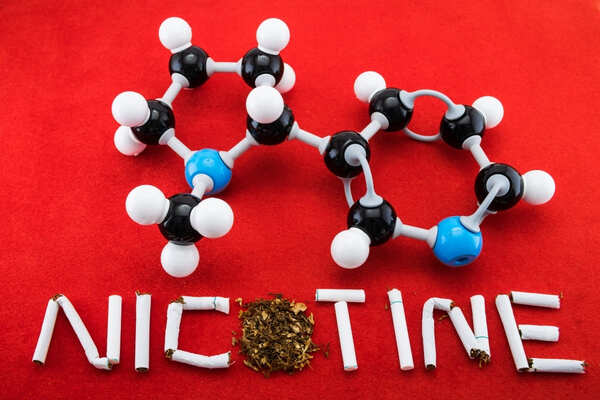
Nicotine is a highly addictive substance found in both tobacco and many e-liquids. The levels of nicotine in vape juices can vary significantly, ranging from nicotine-free options to those with high concentrations. Different nicotine strengths in vape juices can deliver a stronger or milder nicotine hit, allowing users to tailor their experience to their cravings. If you’re new to vaping or looking to reduce your nicotine intake, it’s wise to start with lower concentrations. This approach helps you enjoy the experience of vaping without falling into the trap of nicotine addiction. Remember, the goal is to find a balance that satisfies your cravings without leading to dependency.
VAPE JUICE SAFETY
When it comes to vape juice safety, choosing reputable brands is crucial. Opting for leading brands in the vaping industry can provide additional assurance of product safety and quality. Look for companies that adhere to high manufacturing standards and have positive user reviews. Products with transparent ingredient lists are a good sign, while those with ambiguous or incomplete labels should be avoided. Be cautious of low-cost nicotine, high propylene glycol (PG) concentrations, and petroleum-based fluids, as these can be toxic. Opt for natural flavours over artificial flavouring, which can be harmful when inhaled. Your health is worth the extra effort to find safe, high-quality vape juice.
IS VAPING BETTER THAN SMOKING?
In the UK, there is no doubt that vaping is better than smoking! As we mentioned earlier, Public Health England regularly review the evidence on vaping and stand by their assessment that vaping is at least 95% less harmful than smoking.
It is worth noting that the UK and the EU are industry leaders when it comes to vaping regulations, so products made in the UK and EU are going to be superior to those found elsewhere in terms of their safety. Things like disposable vapes out of Asia are sealed units and so often skirt around the regulatory process that UK producers of vape juice adhere to, which is why it took investigations by the Daily Mail and British American Tobacco to find that many of the disposable vapes on UK shelves contained illegal levels of e-liquid. If the legal limit for the volume of e-liquid was ignored on such a grand scale, what other rules have they chosen to ignore?
With this in mind, there are a few rules to follow for the utmost safety when you vape.
-
Firstly, buy UK-made e-liquid for vape juice that contains high quality ingredients.
-
Secondly, choosing a low powered device reduces the already-small amount of harmful particulates that vaping does produce, so low power vaping is safer than using a high powered vape mod.
-
Thirdly, buy from a retailer you can trust. Check out customer reviews, speak to them if you can, and any other research like how long they have been in business will give you some clues as to how well they serve their customers!
Following these guidelines is essential for safe vaping and helps minimise potential health risks.
WHAT TO CONSIDER WHEN BUYING E-CIGARETTE REFILLS AND E-LIQUIDS?
With a lot of problematic flavourings in use on the global vaping market, taking some care over which e-liquids to purchase is a good idea. The variation of regulation between countries means that vapers are well protected in some places and not others.
It is important to be informed about vape juice flavours and the potential health risks associated with certain flavouring additives. Some flavours, particularly fruity and cinnamon variants, may cause respiratory issues or other health concerns. Always select products from reputable brands that prioritise ingredient safety.
Choosing a premium e liquid can provide greater assurance of quality and safety, as these products are typically made with pharmaceutical-grade ingredients and produced under stricter manufacturing standards.
Researchers at Johns Hopkins, Maryland USA, recently examined chemicals in e-liquid aerosols from five e-cigarette products in the US, and found the inclusion of tributylphosphine oxide, a solvent, and caffeine, a stimulant. This bolsters the claims that vaping is as harmful as smoking, but remember that the regulation in the USA is not as stringent as here in the UK!
Be sure to look at product reviews on websites, or forums, to get an idea of how cigarette users are responding to a brand. If you are concerned about certain flavourings or ingredients in e-liquids, then see if the brand provides any details regarding the ingredients, either on their website or by request. Transparency is always an encouraging quality in a company!
CHOOSING SAFER ALTERNATIVES
Choosing safer alternatives in the world of vaping involves a few key steps. First, opt for products with transparent ingredient lists and avoid those with ambiguous or incomplete labels. Look for brands that adhere to higher manufacturing standards and have positive user reviews. If you’re trying to quit smoking, consider the nicotine content in your vape juice and gradually reduce it. Additionally, choose natural flavours over artificial flavouring, which can be harmful when inhaled. Your health and safety should always come first.
Making informed choices and seeking support can help you have a safer and more satisfying vaping journey.
HARMFUL CHEMICALS YOU SHOULD AVOID IN E-LIQUIDS: CONCLUSION
Public Health England, along with the Royal College of Physicians, estimate that the damage from e-cigarettes will not exceed 5% of the damage done from smoking traditional cigarettes, suggesting that vaping is 95% safer than smoking tobacco products.
This means that despite the presence of certain harmful chemicals, the volumes of these chemicals in electronic cigarette are generally in much lower concentrations than those found in tobacco cigarettes.
Being careful where you buy your liquids and buy from the safest e liquid brand, and using a less powerful device, are the best ways to minimise the harmful chemicals produced by e-cigarettes!
If you are looking for lower powered vaping devices, with e-liquids made in the UK, then check out one of SMOKO’s E-cigarette Starter Kits today!
FAQ: Harmful Chemicals in Vape Juice and What to Avoid
1. Why are some vape juice brands dangerous?
Certain vape juice brands cut corners by using low-quality ingredients or harmful additives to reduce costs. These can include diacetyl, vitamin E acetate, and synthetic cannabinoids—all linked to serious health risks, especially when inhaled.
2. What chemicals should I look out for in e-liquids?
Avoid vape juices that contain:
-
Diacetyl (linked to "popcorn lung")
-
Vitamin E acetate (associated with lung injury)
-
Acetoin and acetyl propionyl (respiratory irritants)
-
Unknown synthetic additives (often found in unregulated products)
3. Are all disposable vapes unsafe?
Not all, but many unregulated disposable vapes—especially those from non-compliant international brands—may contain higher levels of nicotine or undeclared chemicals. Stick with reputable, UK-regulated brands to stay safe.
4. How can I tell if a brand is trustworthy?
Check if the brand is MHRA-compliant (UK’s Medicines and Healthcare products Regulatory Agency), provides lab test results, and uses pharmaceutical-grade ingredients.
5. Is it safer to vape than to smoke?
According to Public Health England, regulated vaping products are at least 95% less harmful than smoking. However, this only applies to high-quality, legally compliant e-liquids—not illicit or black-market vape brands.
REFERENCES
(1) E-Cigarettes around 95% less harmful than tobacco estimates landmark review
(3) Acetoin is a precursor to diacetyl in e-cigarettes liquids
(4) Outbreak of Lung Injury Associated with the Use of E-Cigarette, or Vaping, Products
ABOUT THE AUTHOR
Written by Dan Overgage
Dan Overgage is a former smoker of 10 years until he became a client of SMOKO E-Cigarettes. Dan started working with SMOKO 5 years ago after successfully quitting using our e-cigarettes and works across our Customer Service and heads up our content creation and research with a strong focus on all things quitting smoking. During his tenure with SMOKO, Dan has written countless blogs and consults with countless clients every day to help them to stay smoke-free.
Last updated 28/07/2025