Table of Contents
- Key Takeaways
- Understanding Nicotine Gum and Its Side Effects
- Navigating Mouth and Stomach Discomfort
- How Nicotine Can Affect Your Whole Body
- Understanding Heart and Circulation Effects
- How To Use Nicotine Gum and Avoid Side Effects
- The Chew and Park Technique
- Choosing the Right Gum Strength to Quit Smoking
- Do's and Don'ts for Using Nicotine Gum
- When to Talk to a Doctor or Pharmacist
- Nicotine Gum FAQ: Your Questions Answered
- Are there alternative nicotine replacement therapies besides gum?
- How should I store nicotine gum and other nicotine products?
- Can Nicotine Gum Damage My Teeth?
- How Long Do the Side Effects Usually Last?
- Is It Possible to Get Addicted to Nicotine Gum?
- A Guide To Nicotine Gum Side Effects - Conclusion
- References
Key Takeaways
-
Nicotine gum is generally safe, but mild side effects like hiccups, jaw discomfort, or throat irritation are common.
-
Proper use reduces side effects – following the “chew and park” method helps control nicotine release and minimise discomfort.
-
Most effects are temporary and often ease as your body adjusts, making nicotine gum an effective quit-smoking aid when used correctly.
Taking the plunge with nicotine replacement therapy (NRT) is a fantastic first step towards saying goodbye to smoking for good, but it's completely normal to have a few questions. Most of the time, the side effects of nicotine gum are nothing to worry about—they’re usually mild, temporary, and often down to how you’re chewing it. Think hiccups, a sore jaw, or a bit of an upset stomach.
Understanding Nicotine Gum and Its Side Effects
Choosing nicotine gum is a positive move for your health, putting you on the right path away from the serious, well-known dangers of smoking. While it's a brilliant tool, it helps to know what to expect. It's important to remember that any side effects from the gum are almost always far less harmful than continuing to smoke. (1)
The secret is realising that most reactions are directly tied to your technique. It’s a bit like drinking a strong espresso; if you knock it back in one go, you might feel a bit jittery or get indigestion. Sip it slowly, and your body has time to adjust. Nicotine gum is much the same—chewing it too fast floods your system with nicotine, which is what often leads to those preventable side effects.
Brands like Nicorette gum are popular, medically approved nicotine replacement therapies available in various flavours and dosages. Compared to other tobacco products, such as cigarettes, nicotine gum is a much less harmful alternative and is designed to help reduce the health risks associated with smoking. For those considering alternatives, vaping is one option. Other forms of nicotine replacement therapy, such as nicotine lozenges and nicotine patches, are also available for those seeking alternatives to gum.
What to Expect When You First Start
When you begin, you might notice a few new sensations as your body gets used to a different way of getting nicotine. These are typically easy to manage and usually fade within the first week or so.
The most common issues people run into include (2):
-
Mouth and Jaw Discomfort: You might feel a tingling sensation in your mouth or find your jaw aches a bit from the chewing.
-
Stomach Troubles: Hiccups, indigestion, or feeling a bit nauseous are classic signs you’re swallowing too much nicotine too quickly.
-
Dizziness or Headaches: This can sometimes be a sign that the nicotine strength you've chosen is a bit too high for you.
Withdrawal symptoms, such as cravings, restlessness, mood swings, and poor concentration, can also occur when quitting smoking. Nicotine gum helps manage these withdrawal symptoms, making it easier to stay on track.
Think of these symptoms as your body’s way of giving you a nudge to adjust how you’re using the gum. By learning the proper “chew and park” method, which we’ll get into later, you can sidestep most of these issues. It’s also worth weighing up whether nicotine gum is better than vaping for your own journey, as everyone finds their own best fit. The goal here is to prepare you and not to worry you, so you can feel confident and in control on your way to becoming smoke-free.
Navigating Mouth and Stomach Discomfort
When you first start on nicotine gum, it’s your mouth, throat, and stomach that are most likely to flag up any issues. This is all down to how the gum works: the nicotine is meant to be absorbed slowly through the lining of your mouth. If you chew it the wrong way, that nicotine can end up going places it shouldn’t. Stomach problems such as nausea, bloating, or indigestion are common side effects of nicotine gum, especially with frequent or prolonged use.
If you chew the gum too fast, you’re releasing a rush of nicotine that can cause irritation. The goal is a slow, steady release, which is why getting the hang of the proper technique is so crucial for a comfortable experience. Using one piece of gum at a time and following the recommended method can help minimise discomfort.
The good news is that most of these oral and stomach-related side effects are temporary. They usually sort themselves out once you master the chewing method. Knowing what’s causing them is the first step to managing them with ease.
Common Oral and Jaw Issues
One of the very first things you might notice is a bit of a tingle or a peppery taste in your mouth. Don't worry, that's just the nicotine getting to work and is perfectly normal. Other issues, however, are a sign that you might need to tweak your chewing style.
-
Sore Mouth or Throat: This is a classic sign of chewing too hard or parking the gum in the same spot for too long.
-
Jaw Ache: Just like with regular chewing gum, going at it for too long can tire out your jaw muscles and lead to discomfort.
-
Dry Mouth: Many people find they experience dry mouth, which can be a nuisance and affect your overall oral health.
The key to avoiding these is the "chew and park" method. Chew the gum slowly until you feel that tingle, then simply park it between your cheek and gum for a minute or so. When you're ready, start chewing again, but remember to move the gum to a different spot each time to prevent any one area from getting irritated. (3)
Hiccups and Stomach Upsets
Ever found yourself with a sudden case of the hiccups or a churning stomach after using nicotine gum? That’s a tell-tale sign you’re swallowing nicotine-filled saliva instead of letting it absorb properly in your mouth. When nicotine hits your stomach, it can irritate the lining and your oesophagus.
This irritation can show up in a few different ways:
-
Hiccups: A very common reaction, caused by the diaphragm getting irritated.
-
Indigestion or Heartburn: Nicotine can relax the muscle that keeps stomach acid where it belongs, leading to reflux.
-
Nausea: Feeling a bit sick is another frequent symptom of swallowing too much nicotine at once.
Key Takeaway: If you’re getting hiccups or feeling nauseous, your body is sending you a clear signal: slow down your chewing. The “park” part of the “chew and park” technique is absolutely vital for stopping these particular side effects in their tracks.
Research backs this up. A major review of clinical trials found that UK users of nicotine replacement therapies, including gum, often reported an increase in gut issues like acid reflux (4). The same studies noted that mouth soreness was also much more likely, especially with higher-dose gums. Using higher doses of nicotine gum can increase the likelihood of experiencing stomach discomfort and other side effects. Thankfully, these problems are rarely serious and, by perfecting your technique, you can sidestep most of this discomfort altogether.
How Nicotine Can Affect Your Whole Body
Once nicotine gets into your bloodstream, it doesn’t just hang around in your mouth and stomach. It takes a tour around your entire body, and this can sometimes lead to some wider, more systemic effects. Getting your head around these potential reactions is a big part of managing your quitting journey successfully.
You can think of nicotine as a messenger that temporarily gives certain systems in your body a wake-up call. If too much of this messenger turns up all at once, or if your body just isn’t used to it, you might start to feel a bit overwhelmed. This often shows up as dizziness or feeling a bit light-headed.
It’s important to use enough nicotine to manage cravings, but not so much that it leads to serious side effects.
Usually, these sensations are a clear sign that your nicotine dose is a touch too high. It might also mean you’ve chewed the gum too aggressively, causing the nicotine to be absorbed too quickly. It’s basically your body’s way of tapping you on the shoulder and saying, “let’s slow this down a bit.” Exceeding the recommended amount of nicotine can result in serious side effects, such as irregular heartbeat or severe symptoms, so consult a healthcare provider if you experience any of these.

Headaches and Dizziness
A mild headache is a pretty common complaint when people first start on nicotine gum. This can crop up for a couple of reasons. For one, nicotine can temporarily narrow your blood vessels, which might be a headache trigger for some people. It could also be a simple case of getting too much nicotine, too soon.
More often than not, simply chewing less frequently or switching to a lower-strength gum can sort this out. For anyone who finds headaches are a persistent issue, exploring natural headache relief treatments could also bring some comfort. The real goal is to find that sweet spot where your cravings are managed without causing any discomfort.
Disruptions to Your Sleep
Your sleep cycle is another area where nicotine’s stimulating effects can make themselves known. Chewing nicotine gum, particularly close to bedtime, is a bit like having a strong coffee right before you try to get some shut-eye. It can make it tougher to drift off and sometimes leads to more vivid or unusual dreams.
In fact, sleep disturbances are a frequently reported side effect among long-term nicotine gum users in the UK. Research shows that people using the gum for over six months sometimes report disrupted sleep patterns, which is tied directly to nicotine's stimulant properties (5). These issues can really impact your overall quality of life, which is why the UK healthcare system advises using nicotine gum for a limited time and getting support if side effects continue.
A Quick Tip: To sidestep sleep problems, try to have your last piece of nicotine gum at least a few hours before you plan to head to bed. This gives the stimulant effects enough time to fade, letting you rest more peacefully.
By connecting these body-wide symptoms to how you're using the gum, you can make simple but effective adjustments. Pacing yourself, picking the right strength, and being mindful of timing are all powerful ways to manage these nicotine gum side effects and make your quit attempt as smooth as possible.
Understanding Heart and Circulation Effects
It’s completely normal to have questions about how nicotine might affect your heart and circulation, and it’s a topic that deserves a clear-headed look. The bottom line is that nicotine is a stimulant. That means it temporarily gives your system a little kick, increasing your heart rate and causing a slight, short-term rise in blood pressure. This happens with any form of nicotine.
Think of it like having a strong cup of coffee. The caffeine gives you a bit of a jolt, speeding things up for a little while before your body settles back down. For most healthy people without a history of heart problems, the effects from nicotine gum are usually mild and represent a far lower risk than the severe, long-term damage that smoking causes. However, in some cases, nicotine use can cause heart palpitations or even an irregular heartbeat. If you notice an irregular heartbeat, this is a serious side effect and you should stop using nicotine and consult a healthcare provider immediately.
However, the story is a bit different for anyone with a pre-existing heart condition. For them, nicotine’s stimulant properties need to be handled with more care, which makes getting a doctor’s advice before starting absolutely essential.
Heart Rate Palpitations and Increased Blood Pressure
When you first start using nicotine gum, you might notice your heart beating a little faster. Some people also feel what are known as palpitations—a sensation that your heart is fluttering or racing. This is a direct result of nicotine nudging your sympathetic nervous system, the part of your body that controls the "fight or flight" response.
While these feelings are often harmless, they can definitely be unsettling. Research into nicotine replacement therapy (NRT) has shown that cardiovascular side effects are a common concern. A major review of various studies did find an increased risk of heart palpitations and chest pains among people using NRT. But here’s the crucial part: the same studies found no solid evidence of a rise in serious events, like heart attacks, from using NRT on its own. If you want to dive deeper, you can read the full research about NRT and cardiovascular events. The main takeaway is that while you might notice some mild effects, the risk is worlds apart from continuing to smoke.
When a Doctor's Advice Is Crucial
For anyone with a pre-existing cardiovascular condition, the guidance is crystal clear. If you have a history of any of the following, speaking with your GP before using nicotine gum is non-negotiable:
-
A recent heart attack
-
Severe or worsening angina (chest pain)
-
A serious heart rhythm abnormality (arrhythmia)
-
Uncontrolled high blood pressure
Nicotine gum and other forms of nicotine replacement therapy (NRT) should only be used under medical supervision, and in some cases, may require a prescription from your healthcare provider.
In these situations, a doctor needs to carefully weigh the benefits of quitting smoking against the potential strain nicotine could put on your heart. In fact, UK clinical guidelines specifically caution against using NRT without a doctor’s supervision if you have an unstable heart condition. (6)
Important Reminder: Nicotine gum is a tool to help you stop smoking, not a long-term habit. The whole point is to gradually wind down your dependence. If you use it while still smoking, you risk overloading your system with nicotine, which could increase the strain on your heart.
For the vast majority of people, any nicotine gum side effects related to the heart and circulation are manageable and temporary. But if you have any underlying health issues, a chat with a healthcare professional is the safest and smartest first step to take. It’s the best way to make sure your journey to quitting is both successful and safe.
How To Use Nicotine Gum and Avoid Common Side Effects

Knowing the potential nicotine gum side effects is one thing, but knowing how to sidestep them altogether is what makes for a successful quit attempt. The great news is that most issues don’t come from the gum itself, but from how people use it.
By getting a few simple techniques down, you can take control of your experience and keep any discomfort to a minimum. Nicotine gum, such as Nicorette gum, is available over the counter and should be used according to the instructions provided to ensure safety and effectiveness.
The classic mistake is to chew it like a regular piece of Wrigley’s. This dumps all the nicotine into your system way too fast, often leading to hiccups, an upset stomach, or feeling a bit dizzy. The real goal is a slow, steady release of nicotine that keeps cravings handled without overwhelming you.
The Chew and Park Technique
This method is hands-down the best way to prevent the vast majority of side effects. It’s easy to remember and makes sure the nicotine is absorbed correctly through the lining of your mouth—not your stomach, where it can cause trouble.
-
Chew Slowly: Start chewing the gum gently. You're looking for a slight tingling feeling or a peppery taste. That’s your cue that nicotine is being released.
-
Park It: As soon as you feel that tingle, stop chewing. Tuck the gum between your cheek and your gum and just let it sit there for about a minute, or until the sensation fades away.
-
Repeat: Once the tingling is gone, start chewing slowly again to release a bit more nicotine. When the peppery taste comes back, park the gum in a different spot.
-
Continue: Keep this gentle chew-and-park cycle going for about 30 minutes, or until the flavour has completely gone. This slow-release approach is the secret to avoiding any stomach irritation.
Choosing the Right Gum Strength to Quit Smoking
Getting the dose right is vital. It’s the key to managing your cravings without inviting any unwanted side effects. Nicotine gum usually comes in two strengths, and which one is right for you boils down to your old smoking habits.
-
2mg Gum: This is the go-to strength for anyone who smoked fewer than 20 cigarettes a day.
-
4mg Gum: This higher dose is designed for heavier smokers—those who got through more than 20 cigarettes a day or found themselves reaching for one within 30 minutes of waking up.
Kicking off with a dose that’s too high can lead straight to things like dizziness or nausea. If you’re on the fence, it’s always smarter to start with the lower strength and see how you get on. Starting with a lower dose of nicotine can help reduce the risk of side effects and dependence. Understanding how 2mg nicotine gum equals how many cigarettes in terms of nicotine delivery can give you the right perspective to make a confident choice.
To help you get the most out of your nicotine gum while keeping side effects at bay, here’s a quick reference table of some essential do’s and don’ts.
Do's and Don'ts for Using Nicotine Gum
|
Do This |
Don't Do This |
Reason Why |
|---|---|---|
|
Follow the "Chew and Park" method |
Chew the gum continuously like regular gum |
This prevents releasing too much nicotine at once, which can lead to hiccups, nausea, and an upset stomach. |
|
Start with the correct strength |
Guess your dosage or start too high |
Choosing the right dose based on your smoking history helps manage cravings effectively without side effects. |
|
Wait 15 minutes after eating or drinking |
Drink coffee, juice, or fizzy pop right before or during |
Acidic drinks can prevent your body from absorbing the nicotine properly, making the gum less effective. |
|
Stick to the recommended daily amount |
Use more pieces than directed |
Overusing the gum can lead to nicotine overdose symptoms like dizziness, headaches, and a rapid heartbeat. |
|
Use it when you have a craving |
Use it out of habit when you don't need it |
The goal is to manage cravings, not replace one habit with another. Using it mindfully helps you wean off. |
|
Store it properly at room temperature |
Leave it in your car or in extreme temperatures |
Extreme heat or cold can degrade the nicotine and reduce the gum's effectiveness. |
Following these simple guidelines can make a huge difference in your experience. It ensures the gum works as it's meant to—as a tool to help you quit smoking comfortably and successfully.
Crucial Tip: Give acidic drinks like coffee, fruit juice, or fizzy pop a wide berth for at least 15 minutes before and during use. Acidity lowers the pH in your mouth, which massively reduces how much nicotine your body can actually absorb. This makes the gum far less effective. Sticking to water is your best bet for getting the full benefit.
When to Talk to a Doctor or Pharmacist
For the most part, the side effects you might get from nicotine gum are pretty mild and usually sort themselves out with a few simple tweaks. But your health is always the top priority, so it’s vital to know when a symptom needs a professional’s opinion. Always inform your care team about all other drugs, other medicines, and certain medications you are taking, as these can interact with nicotine gum and affect its safety or effectiveness.
Think of it like this: you need to know the difference between a minor road bump and a genuine hazard sign on your journey to becoming smoke-free. While most issues can be handled at home, some reactions are unmistakable red flags. These aren’t the kind of symptoms you wait out or ignore; they warrant an immediate chat with your GP or pharmacist.
Recognising Serious Symptoms
Don’t hesitate to seek professional medical advice if you experience any of the following symptoms:
-
Signs of an Allergic Reaction: This could show up as swelling in your face, lips, tongue, or throat. Hives or any difficulty breathing are also serious signs.
-
Cardiovascular Issues: Pay close attention to persistent chest pain, a severely irregular or racing heartbeat (palpitations), or feeling intensely dizzy.
-
Severe Gastrointestinal Problems: This includes things like persistent vomiting or severe stomach pain that just won’t let up.
If you suspect a nicotine overdose or poisoning, contact a poison control center immediately for guidance and assistance.
This decision tree gives a simple overview of how to respond to different levels of side effects.
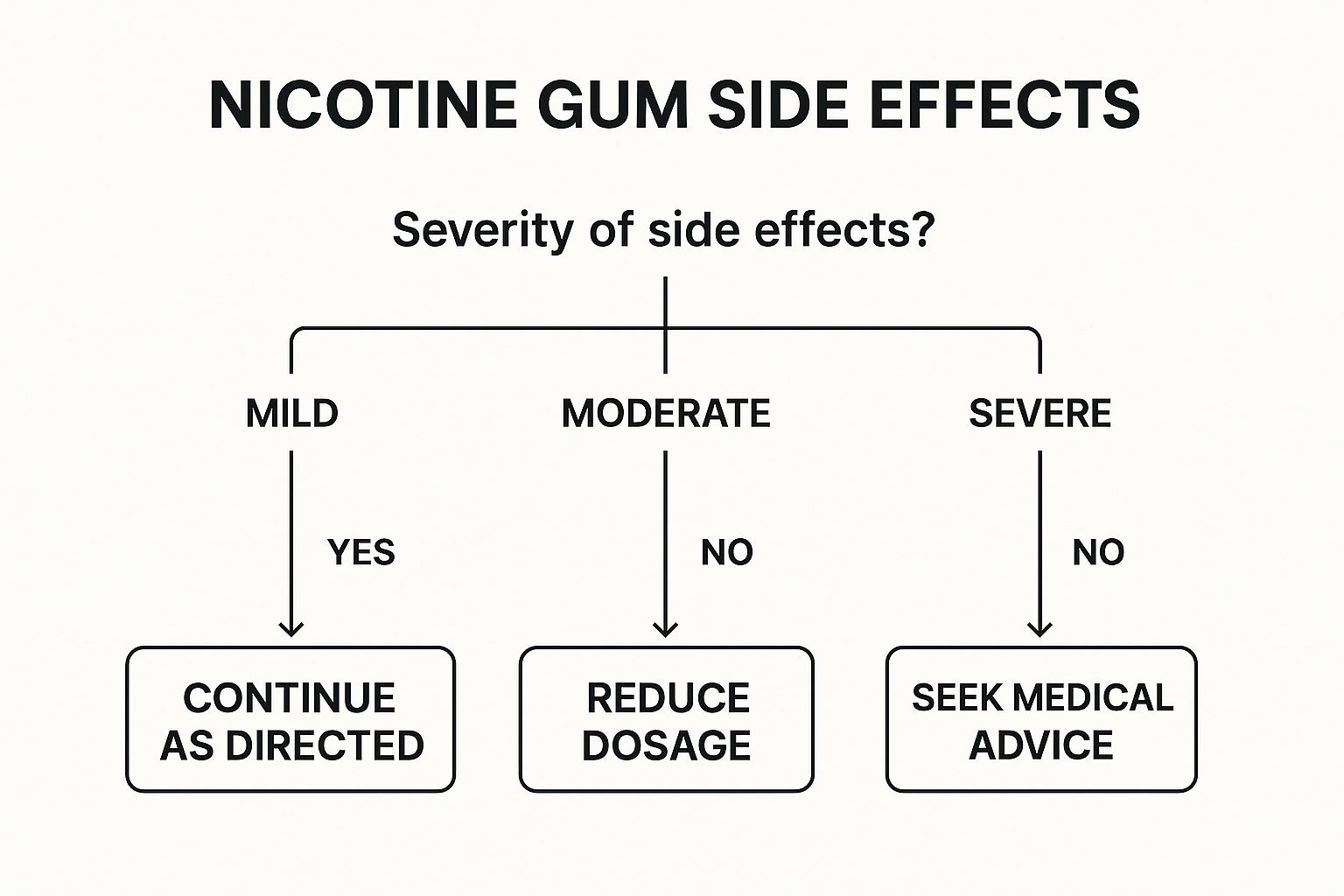
As the infographic shows, your action should match how severe your symptoms are, ranging from carrying on as you are to seeking immediate medical advice.
It’s also a good idea to check in with a healthcare professional if milder side effects, like headaches or nausea, don’t improve after you’ve corrected your chewing technique or adjusted your dose. They can help you troubleshoot the problem or suggest a different quitting aid that might be a better fit.
Making these informed choices is what empowers you to quit smoking safely and confidently. It keeps your long-term health as the main focus. And while some studies are exploring other potential uses, such as the links between nicotine gum and Alzheimer’s, its primary purpose is to be a safe and effective tool to help you stop smoking for good.
Nicotine Gum FAQ: Your Questions Answered
Even after getting to grips with the common side effects, you might still have a few lingering questions. That's perfectly normal. Let's tackle some of the most common queries to help you feel confident as you move forward.
Are there alternative nicotine replacement therapies besides gum?
Yes, there are several alternative nicotine replacement therapies (NRTs) available, including the nicotine patch and nicotine nasal spray. The nicotine patch is applied to the skin and delivers a steady dose of nicotine throughout the day. Nicotine nasal spray is another option, which is sprayed into the nostrils to help manage cravings. However, nasal spray can cause side effects such as nasal irritation and watery eyes, especially when you first start using it. These symptoms are usually temporary, but if they persist, consult your healthcare provider.
How should I store nicotine gum and other nicotine products?
It is very important to keep nicotine gum and all nicotine products out of the reach of children and pets. Accidental exposure can be dangerous and may lead to nicotine poisoning, especially in a child. Always store these products securely and dispose of them properly to prevent any risk to children and pets.
Can Nicotine Gum Damage My Teeth?
This is a big concern for many people, and a fair one. The good news is that the gum itself is unlikely to cause cavities, as almost all brands are sugar-free. The main issue is its stickiness.
If you have a lot of dental work—things like bridges, crowns, or fillings—there's a small chance the gum could latch on and potentially loosen them over time. It’s always best to chew gently and maybe have a quick word with your dentist if you've got significant dental restorations. For most people, though, it’s not a major risk.
How Long Do the Side Effects Usually Last?
Most of the initial niggles from nicotine gum are temporary. Think of it as your body's adjustment period. These side effects tend to fade within the first week or two of starting.
As you get the hang of the "chew and park" method and your system gets used to this new way of receiving nicotine, things like hiccups, an upset stomach, or mouth irritation usually sort themselves out.
If side effects are still bothering you after a few weeks, even when you're using the gum correctly, it’s a good idea to have a chat with your local pharmacist or GP.
Is It Possible to Get Addicted to Nicotine Gum?
While nicotine is, by its nature, an addictive substance, the way it’s delivered in gum makes it far less addictive than a cigarette. Smoking sends a massive, rapid-fire hit of nicotine straight to the brain, which is what creates that powerful, hard-to-break reward cycle.
Nicotine gum is completely different. It provides a slow, steady, and controlled release of nicotine. This method doesn't create that intense "rush," which dramatically lowers its potential for dependency. Remember, the goal here is to use the gum as a temporary tool to wean yourself off nicotine for good, not to swap one habit for another.
A Guide To Nicotine Gum Side Effects - Conclusion
Nicotine gum is a safer alternative to consume nicotine than smoking, but it could also serve as one tool in your arsenal to combat smoking cravings and triggers. Vapers tend to be restricted as much as smokers in terms of where they can vape nowadays, so SMOKO Nicotine Gum can be the perfect solution to tackle cravings while travelling on public transport, working in the library or flying to your favourite holiday destination!
Ready to start your journey to a smoke-free life with a trusted, UK-made solution? Explore the full range of quitting aids at SMOKO E-Cigs and Vapes and find the support you need to succeed. Visit us at https://smoko.com to learn more!
References
(1) CDC: Quit smoking medicines are much safer than smoking
(2) Cleveland Clinic: Nicotine Gum
(3) Bracknell Forest Public Health - NRT – Nicotine Gum
ABOUT THE AUTHOR
Written by Dan Overgage
Dan Overgage is a former smoker of 10 years until he became a client of SMOKO E-Cigarettes. Dan started working with SMOKO 5 years ago after successfully quitting using our e-cigarettes and works across our Customer Service and heads up our content creation and research with a strong focus on all things quitting smoking. During his tenure with SMOKO, Dan has written countless blogs and consults with countless clients every day to help them to stay smoke-free.
Last updated 11/09/2025