Table of Contents
- Key Takeaways
- Introduction
- 1. Immediate Cardiovascular Health Improvement
- 2. Enhanced Lung Function and Breathing
- 3. Dramatic Cancer Risk Reduction
- 4. Improved Circulation and Wound Healing
- 5. Enhanced Sense of Taste and Smell
- 6. Significant Financial Savings
- 7. Enhanced Mental Health and Cognitive Function
- Benefits Comparison of 7 Key Quit Smoking Effects
- Your Smoke-Free Future Starts Now
- 7 Life-Changing Benefits of Quitting Smoking in 2025 - Conclusion
- 7 Life-Changing Benefits of Quitting Smoking in 2025 FAQ
- References
Key Takeaways
-
Quit smoking in 2025 and feel the benefits instantly — from better breathing to more energy every day.
-
Saving money, protecting your health, and living longer are just a few of the rewards of going smoke-free.
-
With more quit smoking tools, support, and alternatives than ever - like E-Cigs and Vapes - 2025 is the perfect year to finally quit.
Introduction
Quitting smoking is one of the most powerful decisions you can make for your health, finances, and overall well-being. While the journey may seem daunting, the rewards begin almost immediately and continue to grow for years to come. Many smokers believe the habit helps manage stress, but the reality is a constant cycle of nicotine craving and relief that actually increases anxiety and tension.
Breaking free from this cycle unlocks a cascade of positive changes. The benefits of quitting smoking transform not just your physical health but also your mental clarity and financial freedom. This comprehensive guide will explore the profound advantages you can expect, offering a detailed look at how your body and mind begin to heal. We will delve into specific, tangible improvements, moving beyond generic advice to provide a clear picture of what a smoke-free life entails.
From immediate cardiovascular improvements and enhanced lung function to significant financial savings and a sharper sense of taste and smell, prepare to be amazed at how quickly your life can improve. For those seeking support in their journey, understanding the available alternatives is a crucial first step. Options like the UK-made products from SMOKO can provide a less harmful stepping stone for many on the path to becoming completely smoke-free, helping you reclaim control over your health and future. Not only does Public Health England's evidence reviews finding E-Cigarettes to be 95% less harmful than smoking fulfil the need for harm-reduction, but the latest evidence from Cochrane Library found high-certainty evidence that E-Cigarettes are more effective for quitting smoking than traditional forms of nicotine replacement therapy!
Now you can get Nicotine Gum from SMOKO, too! Our sugar-free nicotine gum range is available in 2mg strength in three great flavours: Mint, Blueberry and Watermelon. Whether you are using nicotine gum to quit smoking, or to tackle nicotine cravings at those times you can't vape, SMOKO Sugar-free Nicotine Gum is the perfect addition to your toolkit to stay smoke-free!
1. Immediate Cardiovascular Health Improvement
Of all the benefits of quitting smoking, the positive changes to your cardiovascular system are among the most rapid and profound. The moment you extinguish your last cigarette, your body begins a remarkable process of self-repair. This isn't a gradual, years-long journey; your heart and blood vessels start to heal almost instantly, offering tangible proof that your decision is already paying off.
The chemicals in tobacco smoke, particularly nicotine and carbon monoxide, place immense strain on your cardiovascular system. Nicotine is a stimulant that artificially raises your heart rate and constricts your blood vessels, forcing your heart to work harder to pump blood throughout your body. Carbon monoxide, a toxic gas, displaces oxygen in your red blood cells, essentially starving your vital organs of the oxygen they need to function. When you stop smoking, you remove these stressors, allowing your body to recalibrate.

The Timeline of Rapid Recovery
The speed at which your body responds is astonishing. This isn't a vague health promise; it’s a measurable physiological change that happens within minutes and hours of quitting.
-
Within 20 minutes: Your heart rate and blood pressure, which were artificially elevated by nicotine, begin to drop back towards normal levels. (1)
-
Within 12 hours: The carbon monoxide level in your blood falls dramatically. Your blood's oxygen-carrying capacity returns to normal, allowing your heart, brain, and other organs to receive the rich supply of oxygen they’ve been missing.
This immediate recovery is why cardiac patients who quit smoking even a day before major surgery experience fewer complications and have better outcomes. The body’s ability to transport oxygen efficiently is critical for healing.
Actionable Tips to Support Your Heart
You can actively support and witness this incredible recovery process. Monitoring these changes can provide powerful motivation during the challenging early days of quitting.
-
Track Your Vitals: Use a home blood pressure monitor to see the numbers decrease. Watching your resting heart rate return to a healthier range provides concrete evidence of your progress.
-
Monitor Oxygen Levels: A simple pulse oximeter, available at most chemists, can show your blood oxygen saturation improving from the moment carbon monoxide leaves your system. Aiming for a consistent reading of 95% or higher is a great goal.
-
Embrace Gentle Movement: Don’t feel you need to run a marathon. Start with light exercise, like a brisk walk. This helps improve circulation, supports your recovering cardiovascular system, and can alleviate withdrawal symptoms.
-
Stay Well-Hydrated: Drinking plenty of water is crucial. It helps flush residual toxins from your system and supports healthy blood flow, making it easier for your heart to do its job.
This immediate cardiovascular improvement is a foundational benefit of quitting smoking, setting the stage for all the long-term health gains that follow. It's a powerful reminder that your body wants to heal, and it starts the second you give it the chance.
2. Enhanced Lung Function and Breathing
While the heart benefits from quitting almost instantly, one of the most noticeable and life-changing benefits of quitting smoking involves your lungs. For years, smoking has paralysed and destroyed the delicate cleaning mechanisms in your respiratory system. The moment you quit, your lungs begin a slow but powerful process of regeneration, leading to clearer airways, easier breathing, and a profound reduction in respiratory illness.
The constant inhalation of smoke damages the cilia, tiny hair-like structures that line your lungs and airways. Their job is to sweep out mucus, dirt, and other debris. Smoking paralyses them, allowing tar and toxins to accumulate, which leads to the infamous "smoker's cough," (2) frequent chest infections, and chronic breathlessness. When you stop smoking, these cilia begin to regrow and function again, actively cleaning your lungs for the first time in years.

The Timeline of Respiratory Recovery
The improvements to your breathing can be felt much sooner than you might expect. This tangible change serves as powerful daily reinforcement that your decision to quit is working.
-
Within a few weeks: You may notice your "smoker's cough" gets temporarily worse. This is a positive sign that your cilia are working again, clearing out the accumulated gunk from your airways.
-
From 1 to 9 months: Lung function continues to improve significantly. Coughing, sinus congestion, and shortness of breath decrease. You’ll likely find you have more energy for physical activity as your body gets more oxygen. Former smokers often report being able to climb stairs or run for a bus without feeling winded for the first time in years.
This recovery is vital for long-term health. For those with Chronic Obstructive Pulmonary Disease (COPD), quitting is the single most effective way to slow the disease's progression and maintain a better quality of life. Athletes who quit often see measurable improvements in their performance and endurance.
Actionable Tips to Support Your Lungs
You can actively help your lungs heal and track the amazing progress you’re making. These steps not only aid recovery but also provide motivation to stay smoke-free.
-
Practise Deep Breathing: Simple diaphragmatic (belly) breathing exercises can help improve lung capacity and efficiency. Inhale slowly through your nose, letting your belly expand, and exhale slowly through your mouth. This helps exercise and strengthen your recovering lungs.
-
Stay Active: Regular physical activity, even a brisk daily walk, is fantastic for your respiratory system. It encourages healthy lung expansion and improves your body's ability to use oxygen efficiently.
-
Avoid Irritants: Your lungs are in a sensitive healing phase. Do your best to avoid secondhand smoke, heavy air pollution, and harsh chemical fumes that can hinder the recovery of your cilia.
-
Stay Hydrated: Just as with cardiovascular health, drinking plenty of water is essential. It helps keep the mucus in your airways thin, making it easier for your newly active cilia to clear it out.
The journey to healthier lungs is one of the most rewarding benefits of quitting smoking, restoring a fundamental aspect of your wellbeing. For more information on the wide-ranging health improvements, you can learn more about the surprising health benefits of quitting smoking in this video.
3. Dramatic Cancer Risk Reduction
Of all the long-term benefits of quitting smoking, the profound reduction in your cancer risk is perhaps the most life-altering. While the cardiovascular improvements are immediate, the protection you build against various cancers is a powerful reward for your long-term commitment. This isn't just about lung cancer; quitting significantly lowers your risk for a wide range of cancers throughout your body.
The thousands of chemicals in tobacco smoke, including at least 70 known carcinogens, directly damage your DNA. This cellular damage is the root cause of cancer, as it allows cells to grow uncontrollably. When you stop introducing these toxins into your body, you halt this continuous assault. This gives your body a crucial opportunity to repair existing DNA damage and stop new mutations from forming, effectively lowering your cancer risk over time.
The following timeline infographic illustrates the significant milestones in cancer risk reduction after you quit.
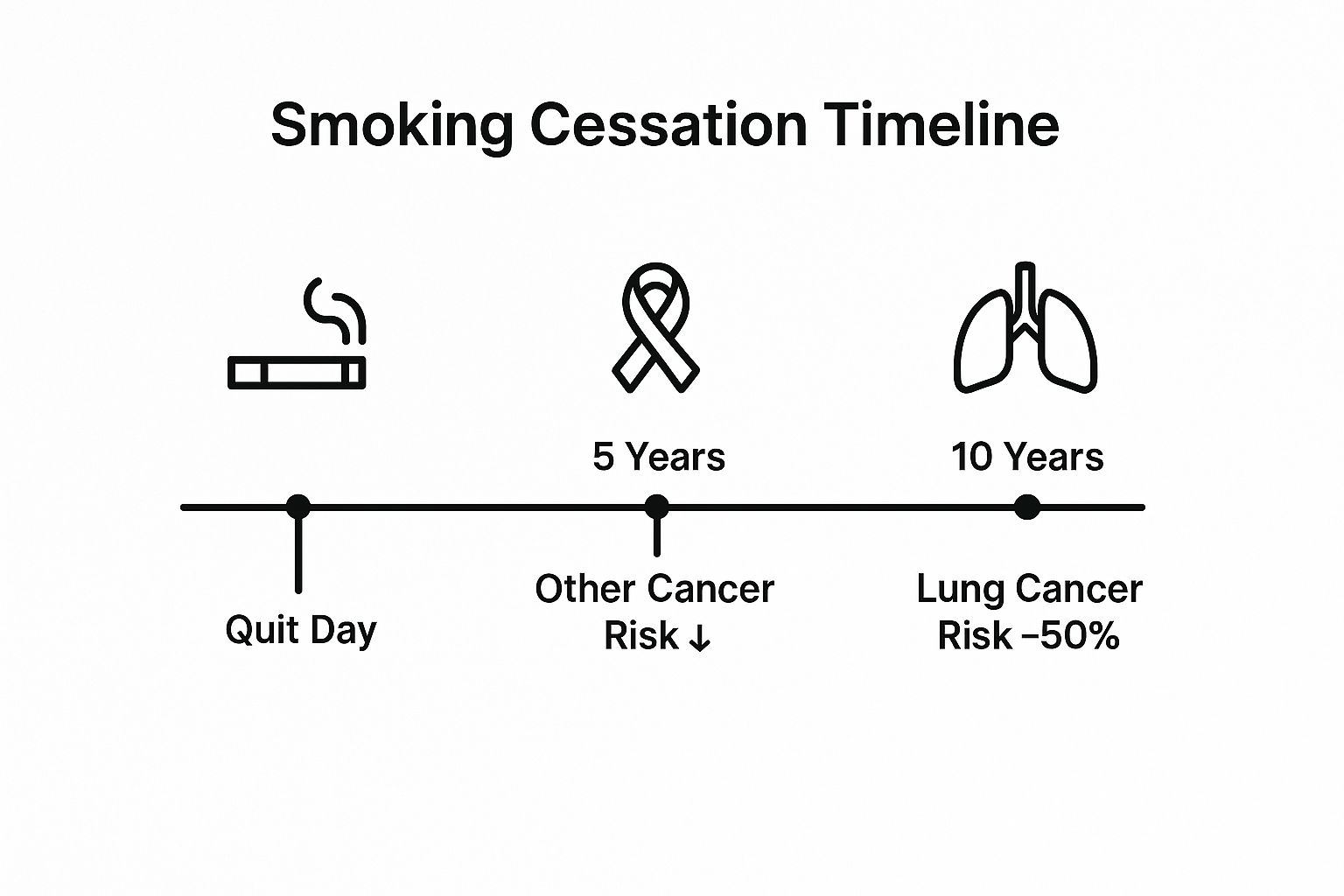
This visualisation highlights how the risk of developing several cancers drops significantly within five years, while the major milestone for lung cancer risk is reached at the ten-year mark.
The Timeline of Cellular Repair
Unlike the rapid cardiovascular changes, cancer risk reduction is a more gradual process that unfolds over years. However, the progress is steady and substantial, as confirmed by decades of research from organisations like the American Cancer Society.
-
Within 5 years: Your risk of developing cancers of the mouth, throat, oesophagus, and bladder is cut in half. For women, the risk of cervical cancer falls to that of a non-smoker. (3)
-
Within 10 years: Your risk of dying from lung cancer is about half that of a person who is still smoking (4). Your risk of larynx (voice box) and pancreatic cancer also decreases significantly.
These statistics represent one of the most compelling reasons to quit for good. You are actively rewriting your future health outcomes and reclaiming your body from the carcinogenic effects of tobacco.
Actionable Tips to Maximise Your Protection
You can enhance your body’s natural repair processes and further reduce your cancer risk with proactive lifestyle choices. These steps complement your decision to quit and support long-term wellness.
-
Maintain Regular Screenings: Quitting is a massive step, but it doesn't erase all risks overnight. Continue with regular health check-ups and cancer screenings as recommended by your GP. Early detection is key.
-
Adopt an Anti-Cancer Diet: Focus on a diet rich in antioxidants found in fruits, vegetables, and whole grains. These compounds help your body fight cellular damage and support the repair of tissues affected by smoking.
-
Minimise Other Carcinogenic Exposures: Be mindful of other environmental risks, such as excessive sun exposure or workplace chemicals. Reducing your overall carcinogenic load gives your body the best possible chance to heal.
-
Stay Active: Regular physical activity is linked to a lower risk of several types of cancer. It also boosts your immune system, which plays a vital role in identifying and destroying abnormal cells.
Reducing your cancer risk is a marathon, not a sprint. This enduring benefit is a powerful motivator, proving that your commitment today provides profound protection for decades to come.
4. Improved Circulation and Wound Healing
Among the most impactful benefits of quitting smoking is the dramatic improvement in your body’s circulatory system. The negative effects of smoking on your blood vessels are profound, but the good news is that they are largely reversible. Once you stop introducing nicotine and other toxins into your system, your body can begin the vital work of repairing this network, leading to better overall health and a remarkable ability to heal.
Smoking damages your circulatory system in two primary ways. Nicotine causes vasoconstriction, which is the tightening and narrowing of your blood vessels. This forces your heart to pump harder and restricts blood flow, especially to your extremities. Concurrently, other chemicals in tobacco smoke thicken your blood and make it more prone to clotting, further hampering circulation. When you quit, this cycle is broken, allowing your blood vessels to relax and widen, and your blood to flow more freely.
The Timeline of Rapid Recovery
The restoration of your circulatory health begins within days and continues to improve over the following weeks and months. This process directly enhances your body’s ability to repair itself, which is a cornerstone of long-term health.
-
Within 2 to 12 weeks: Your circulation improves significantly. You may notice that your hands and feet are no longer constantly cold, and physical activities like walking become easier as your muscles receive more oxygen-rich blood.
-
Healing Rates: This enhanced blood flow has a direct, measurable impact on wound healing. Surgical patients who quit smoking heal significantly faster, with studies showing a reduction in healing time by 25-50% compared to those who continue to smoke. This benefit is crucial for anyone facing surgery or managing conditions like diabetic foot ulcers.
This improvement is a powerful demonstration of your body’s resilience. Better circulation means more oxygen and nutrients can reach every cell, accelerating recovery from injuries and reducing the risk of complications.
Actionable Tips to Support Your Circulation
You can actively encourage and enhance your circulatory recovery. Taking these steps not only speeds up the process but also helps you feel more connected to the positive changes happening in your body.
-
Engage in Regular Exercise: Start with brisk walking or cycling. Physical activity is one of the most effective ways to boost circulation, strengthen your heart, and support the healing of your blood vessels.
-
Massage Hands and Feet: Gently massaging your extremities can manually stimulate blood flow. This is particularly beneficial if you’ve previously suffered from cold hands and feet due to poor circulation.
-
Stay Warm: As your circulation recovers, your body is still readjusting. Avoid exposing your hands and feet to extreme cold, as this can trigger temporary vasoconstriction. Wear warm socks and gloves when necessary.
-
Monitor Wound Healing: If you have any minor cuts, scrapes, or other wounds, pay attention to how quickly they heal. Witnessing your body's improved ability to repair itself can be an incredibly powerful motivator to remain smoke-free.
For those finding the initial transition challenging, understanding all available options is key. You can explore a variety of methods to help you manage cravings and stay on track. For a deeper look into one popular alternative, you can find more information about using e-cigarettes to help you stop smoking on smoko.com.
5. Enhanced Sense of Taste and Smell
One of the most rewarding benefits of quitting smoking is the swift and delightful return of your senses of taste and smell. For years, the toxic chemicals in cigarette smoke have been dulling your taste buds and damaging the sensitive nerve endings in your nose. The moment you quit, your body starts to heal these sensory receptors, reawakening a world of flavour and aroma you may have forgotten existed.
This isn't a minor change; it fundamentally alters your daily experience of eating and drinking. The constant assault of smoke deadens your palate and olfactory system, making it difficult to distinguish subtle notes in food and drink. When you remove this interference, the intricate flavours of your morning coffee, the fresh zest of a lemon, or the comforting scent of a home-cooked meal return with surprising vibrancy. Many former smokers are shocked by how much they were missing.
The Timeline of Sensory Revival
This particular benefit of quitting smoking is remarkably fast. Your body is eager to repair this damage, and you'll notice significant changes in just a couple of days, providing powerful and immediate positive reinforcement for your decision.
-
Within 48 hours: The nerve endings responsible for taste and smell begin to regrow and repair themselves. You'll start to notice that foods taste more distinct and scents are clearer and more pronounced.
-
Within a week: The improvements become much more noticeable. You might find that foods you once considered bland are now rich with flavour, or that you no longer need to add extra salt or sugar to your meals to make them palatable.
This sensory revival can be a game-changer. Chefs who quit smoking often report a renewed passion for their craft, and wine or coffee enthusiasts discover a newfound ability to appreciate complex tasting notes. Beyond revitalizing your senses, quitting smoking also dramatically improves your overall oral hygiene, effectively addressing chronic bad breath.
Actionable Tips to Savour the Change
You can actively engage with and enjoy this sensory recovery. Using these heightened senses as a motivational tool can be incredibly effective during challenging moments of your quit journey.
-
Explore New Flavours: This is the perfect time to try a cuisine you’ve never experienced before. Visit a new restaurant or buy an unfamiliar ingredient from the supermarket. Your newly sharpened palate is ready for an adventure.
-
Practise Mindful Eating: Take the time to truly savour your food. Chew slowly, close your eyes, and try to identify all the different flavours and textures. This turns every meal into a rewarding experience.
-
Use It as a Motivator: When a craving strikes, remind yourself of the wonderful taste of your last meal or the fresh smell of the outdoors. Connect the act of not smoking with the pleasure of being able to taste and smell properly again.
-
Be Mindful of Portions: As food becomes more delicious, it’s easy to overindulge. Pay attention to portion sizes to ensure your enjoyment of food supports your overall health goals rather than undermining them.
Rediscovering taste and smell is a profound and personal reward for quitting smoking, adding a rich new layer of enjoyment to your everyday life.
6. Significant Financial Savings
While the health benefits are paramount, one of the most immediate and tangible rewards of quitting smoking is the dramatic improvement in your financial well-being. This isn't a small change; it's like giving yourself a significant pay rise overnight. The habit of smoking quietly siphons thousands of pounds from your budget each year, and stopping this outflow of cash can fundamentally alter your financial future.
The cost goes far beyond the price of a packet of cigarettes. It includes the cumulative expense of lighters, cleaning products to remove smoke residue, and even higher insurance premiums for health and life cover. When you quit, you're not just saving a few pounds a day; you're cutting off a major, multifaceted expense that impacts your entire financial health. Seeing this money accumulate provides a powerful, daily reminder of your success.

The Staggering Scale of Savings
The amount of money you can save is genuinely life-changing. Depending on your location and how heavily you smoked, the savings can easily fund major life goals.
-
A pack-a-day smoker: In the UK, where cigarette prices are high, a 20-a-day habit can cost well over £5,000 per year. That's enough for a luxury family holiday, a substantial deposit on a new car, or a significant boost to your savings.
-
Couples who quit together: If both partners smoke, the combined savings can exceed £10,000 annually. This level of saving can accelerate mortgage repayments or build a robust retirement fund. Over a decade, this can amount to over £100,000.
Actionable Tips to Maximise Your Savings
Actively managing the money you save can turn this benefit into a powerful motivational tool, reinforcing your commitment to staying smoke-free.
-
Calculate Your Personal Savings: Use an online smoking calculator to work out exactly how much you will save per day, week, month, and year. Write this figure down and keep it visible as a constant reminder.
-
Automate Your Savings: Set up an automatic bank transfer for the amount you would have spent on cigarettes each day or week. Move it into a separate savings account so you can physically see the money growing.
-
Create a 'Quit Fund' Goal: Earmark the saved money for a specific, meaningful purchase or experience you've always wanted, like a new piece of technology, a dream holiday, or home renovations. This creates a positive association with quitting.
-
Track Your Financial Progress: Beyond the immediate savings from not buying cigarettes, managing your newfound wealth is crucial. Tools that help you track your financial health and net worth can show you the long-term impact of your decision. For those considering alternatives, it's also worth researching how different options compare financially. To get started, you can explore the financial benefits of switching on smoko.com.
The financial freedom gained is one of the most empowering benefits of quitting smoking, offering immediate rewards that grow substantially over time.
7. Enhanced Mental Health and Cognitive Function
One of the most persistent myths about smoking is that it alleviates stress and improves focus. In reality, the opposite is true. The temporary relief a cigarette provides is merely the calming of withdrawal symptoms, creating a relentless cycle of anxiety and dependence. A significant benefit of quitting smoking is the profound improvement in your mental health and cognitive clarity, freeing you from this chemically induced emotional rollercoaster.
The belief that smoking is a stress-management tool is a powerful illusion created by nicotine addiction. Nicotine withdrawal causes irritability, anxiety, and difficulty concentrating. Smoking a cigarette relieves these symptoms, creating a false association between smoking and mental calm. By quitting, you break this cycle for good. After the initial withdrawal period passes, many former smokers report feeling significantly calmer, more emotionally stable, and better equipped to handle life's challenges.
The Timeline of Mental Liberation
The journey to better mental health begins soon after you quit, with benefits becoming more pronounced over time. This isn't just a feeling; it's a measurable shift in your psychological well-being.
-
Within a few weeks: The initial irritability and mood swings from nicotine withdrawal start to subside. Your brain chemistry begins to rebalance, leading to a more stable and positive mood.
-
Within three to six months: Research consistently shows a significant reduction in anxiety and depression levels. One major study found anxiety scores dropped by around 25% six months after quitting, a greater effect than many anti-anxiety medications. (5)|
-
Long-term: Your cognitive functions, including memory, concentration, and problem-solving skills, improve. Students often report better academic performance, and professionals notice an increase in productivity and focus.
The journey of quitting smoking often involves significant personal growth. Sticking to your commitment requires you to overcome self-doubt and build real confidence in your own resilience.
Actionable Tips to Support Your Mind
You can actively nurture your mental and cognitive recovery. These practices can help you manage the transition and accelerate the positive changes.
-
Develop New Coping Mechanisms: Instead of reaching for a cigarette, try stress-reduction techniques like deep breathing exercises, mindfulness meditation, or yoga. These provide genuine, sustainable stress relief.
-
Embrace Regular Exercise: Physical activity is a powerful mood booster. Even a brisk 15-minute walk can release endorphins, reduce stress hormones, and improve mental clarity.
-
Prioritise Sleep: Smoking disrupts sleep patterns. As you quit, focus on creating a healthy sleep routine. This will drastically improve your mood, cognitive function, and ability to handle cravings.
-
Seek Supportive Counselling: You don't have to go through it alone. Talking to a therapist or joining a support group can provide invaluable strategies and encouragement, making the mental and emotional journey much smoother.
This boost to your mental health is one of the most liberating benefits of quitting smoking. It empowers you to manage stress effectively and experience a more authentic sense of well-being, unchained from addiction.
Benefits Comparison of 7 Key Quit Smoking Effects
|
Benefit |
Implementation Complexity 🔄 |
Resource Requirements ⚡ |
Expected Outcomes 📊 |
Ideal Use Cases 💡 |
Key Advantages ⭐ |
|---|---|---|---|---|---|
|
Immediate Cardiovascular Health Improvement |
Low – quitting smoking begins rapid effects |
Minimal – self-monitoring tools helpful |
Heart rate & blood pressure normalise quickly; better oxygen circulation |
Quitting smokers needing quick health gains; pre-surgical patients |
Fast measurable heart & vascular improvements; lowers heart attack risk |
|
Enhanced Lung Function and Breathing |
Moderate – requires sustained abstinence |
Moderate – spirometer, exercise recommended |
Lung capacity and cilia function improve over weeks to months |
Smokers with respiratory issues; athletes wanting stamina boost |
Easier breathing; fewer infections; improved stamina |
|
Dramatic Cancer Risk Reduction |
Low – long-term sustained abstinence |
Low to moderate – regular screenings advisable |
Substantial reduction in multiple cancer risks over years |
Long-term quitters; individuals with family cancer history |
Major reduction in deadly disease risks; progressive benefits |
|
Improved Circulation and Wound Healing |
Moderate – may take weeks to months |
Moderate – exercise and wound monitoring needed |
Enhanced blood flow and faster wound recovery |
Patients requiring surgery; diabetics; vascular condition sufferers |
Faster healing; reduced clot risk; better peripheral circulation |
|
Enhanced Sense of Taste and Smell |
Low – starts within days after quitting |
Minimal – mindful eating encouraged |
Taste and smell recover within weeks |
Food enthusiasts; individuals seeking quality of life improvement |
Greater enjoyment of food; improved safety awareness |
|
Significant Financial Savings |
Low – immediate cessation |
Low – planning and tracking costs |
Immediate and long-term monetary savings |
All smokers seeking financial relief |
Large savings; reduced financial stress; investment potential |
|
Enhanced Mental Health and Cognitive Function |
Moderate – initial withdrawal challenges |
Moderate – counselling, stress management recommended |
Reduced anxiety, better mood, improved cognition within months |
Smokers with mental health concerns; stress-prone individuals |
Improved emotional well-being; cognitive gains; better sleep |
Your Smoke-Free Future Starts Now
Embarking on the journey to quit smoking is one of the most transformative decisions you can make for your health, finances, and overall quality of life. We have explored the extensive and powerful benefits of quitting smoking, painting a clear picture of the new reality that awaits you. This isn't just about avoiding illness; it's about actively reclaiming your vitality and enriching every aspect of your daily existence.
From the very first day, your body begins a remarkable process of recovery. We saw how your cardiovascular system starts to heal almost immediately, lowering your blood pressure and heart rate. Within weeks, your lung function improves, making simple activities like climbing stairs or walking the dog feel refreshingly easier. These are not distant, abstract rewards; they are tangible improvements you can feel.
Consolidating Your Gains for a Healthier Life
The long-term advantages are even more profound. Consider the dramatic reduction in your risk for life-threatening conditions like cancer and heart disease, a pivotal benefit that adds years to your life and life to your years. Your enhanced circulation promotes faster healing, your senses of taste and smell return with vibrant clarity, and your mental well-being improves as you break free from the cycle of nicotine dependency. Each of these benefits builds upon the last, creating a powerful momentum towards a healthier you.
Let's not forget the significant financial liberation. The money once spent on cigarettes can be redirected towards your goals, whether that's a family holiday, a new hobby, or simply a more comfortable financial future. Visualise what you could do with an extra few thousand pounds each year. This is the financial freedom that quitting offers.
Your Action Plan for a Smoke-Free Life
Recognising these benefits is the first step, but turning knowledge into action is what truly matters. Here’s how you can start your journey today:
-
Set a Quit Date: Choose a specific day to begin your smoke-free life. This creates a clear, tangible goal to work towards.
-
Identify Your Triggers: Understand what situations or feelings make you want to smoke. Whether it's your morning coffee or a stressful moment at work, being aware allows you to develop alternative coping strategies.
-
Build a Support System: Inform your friends, family, and colleagues of your decision. Their encouragement can be a crucial source of strength. Professional services like the NHS Smokefree service also offer invaluable, personalised support.
-
Consider Your Options: For many, switching to a less harmful alternative is a practical and effective strategy. E-cigarettes and vapes, which are considered by Public Health England to be at least 95% less harmful than traditional cigarettes, can help manage nicotine cravings without the thousands of chemicals found in tobacco smoke.
7 Life-Changing Benefits of Quitting Smoking in 2025 - Conclusion
This journey is a personal one, and it is perfectly normal to encounter challenges. The key is to remain persistent, celebrate every small victory, and remember the powerful reasons you decided to quit. Each cigarette you don't smoke is a win. Each day you remain smoke-free is a testament to your strength and commitment to a better life. The incredible benefits of quitting smoking are not a distant dream; they are a reality waiting for you to claim it. Your smoke-free future truly starts now.
Ready to take the first, most important step on your quitting journey? Discover a realistic and satisfying alternative with SMOKO E-Cigs and Vapes. Our UK-made products provide the nicotine you crave without the harmful tar and tobacco, making your transition to a smoke-free life smoother and more manageable. Join the thousands of people who have successfully quit with SMOKO E-Cigs and Vapes today.
7 Life-Changing Benefits of Quitting Smoking in 2025 FAQ
1. How quickly will I notice benefits after quitting smoking?
Many benefits begin within hours. Your heart rate and blood pressure start to drop within 20 minutes, and within a few days your sense of taste and smell improve. Long-term health gains continue for years after quitting.
2. Is quitting smoking in 2025 easier than before?
Yes — with better nicotine replacement therapies, vaping alternatives, and stronger support services, there have never been more effective tools to help you quit.
3. Will I gain weight after quitting smoking?
Some people may notice a small weight gain, but adopting healthy habits like exercise and mindful eating can help you manage it. The health benefits of quitting far outweigh the risks of a few extra pounds.
4. How much money can I save by quitting?
In the UK, smoking a pack a day can cost over £5,000 per year. Quitting in 2025 means big savings that you can put towards holidays, hobbies, debt, and savings or long-term goals.
5. What’s the best way to stay smoke-free?
Combine the right quit method for you — whether that’s nicotine replacement, vaping, or medication — with support from friends, family, or professional services. Tracking your progress and celebrating milestones also helps you stay motivated.
References
(1) American Lung Association: Benefits of Quitting
(2) General health advice - Smoker’s cough: all you need to know
(4) NHS: Prevention - Lung cancer
ABOUT THE AUTHOR
Written by Dan Overgage
Dan Overgage is a former smoker of 10 years until he became a client of SMOKO E-Cigarettes. Dan started working with SMOKO 5 years ago after successfully quitting using our e-cigarettes and works across our Customer Service and heads up our content creation and research with a strong focus on all things quitting smoking. During his tenure with SMOKO, Dan has written countless blogs and consults with countless clients every day to help them to stay smoke-free.
Last updated 04/09/2025